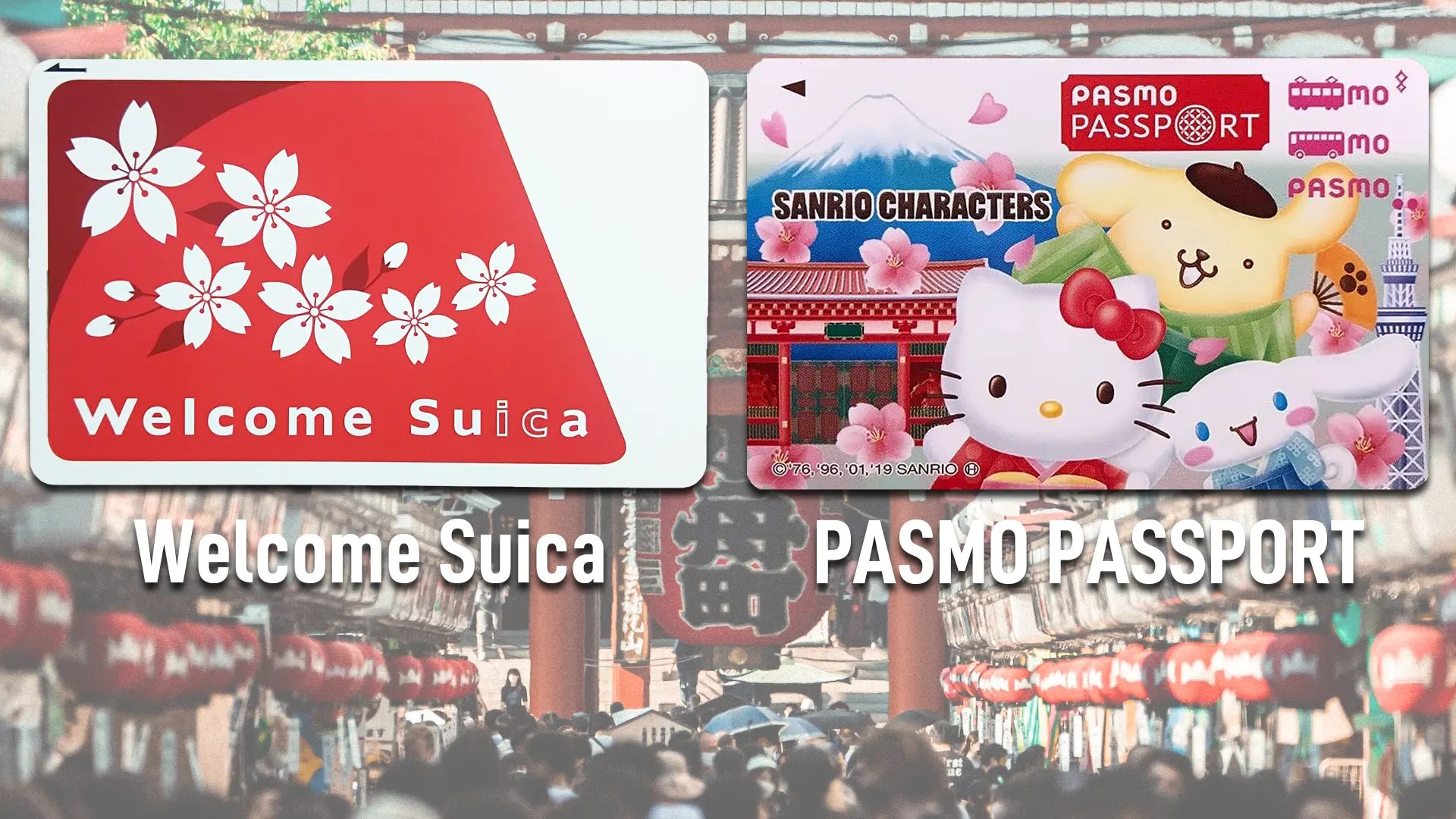
Welcome Suica and TOURIST PASMO are close to identical: each is a short-stay IC card with no deposit, valid for 28 days, and neither pays back what is left on it. Buy whichever one is sold on your way out of the airport, skip both if you carry an iPhone, and pick a standard card if you will stay longer than four weeks.
That verdict rests on one trade. A tourist card avoids the ¥500 deposit and the ¥220 refund fee of a standard card, but whatever you have not spent by day 28 is lost. This guide sets the two cards side by side using JR East's and PASMO's own notices, shows where each is sold, and says when a different ticket is the better buy. For the standard cards in depth, the Suica vs PASMO comparison covers the deposit, the refund counter and the child fares.
The Short Answer in Five Lines
These five points settle the choice for most visitors, and the sections below give the detail behind each one.
- Terms: both cards have no deposit, a 28-day life and no refund, so load only what you expect to spend.
- Buying: Welcome Suica is sold in more places around Tokyo, while TOURIST PASMO is sold at the railway stations at Narita Airport and Haneda Airport.
- iPhone: skip both and add Suica to Apple Wallet.
- Stays over 28 days: buy a standard Suica or PASMO instead.
- Children: Welcome Suica has a child card, and PASMO's release does not mention one.
Welcome Suica and TOURIST PASMO Side by Side

The two cards share their basic terms and differ in where they are sold, which amounts you can buy and who may buy them. The table uses JR East's Welcome Suica page and the April 2026 TOURIST PASMO release from PASMO.
| Welcome Suica | TOURIST PASMO | |
|---|---|---|
| Issuer | JR East | PASMO |
| Deposit | None | None |
| Validity | 28 days, purchase day included | 28 days from the issue date |
| Leftover balance | Not refunded, whatever the balance | Not refunded, even if unused |
| Amounts | ¥1,000, ¥2,000, ¥3,000, ¥4,000, ¥5,000 or ¥10,000 | Narita Airport: ¥2,000 only. Haneda Airport: ¥1,000 to ¥5,000 in ¥1,000 steps, or ¥10,000 |
| Child card | Yes, adult and child versions | Not mentioned in the release |
| Who can buy | One card per person in principle | Short-term overseas visitors only |
| Top-up | Yen only, no credit cards | Yes, by adding value during your stay |
TOURIST PASMO follows the idea of PASMO PASSPORT, the visitor card that PASMO made available until 2024, so older guides that recommend the PASSPORT describe a card from before 2025.
Count the 28 days carefully. JR East counts the day of purchase as day one, and the Welcome Suica stops working on day 29. The GOOD THRU date printed on the back is not the expiry date; the paper handed over with the card carries the validity details, so keep it in your wallet.
Where Each Card Is Sold
Welcome Suica has the wider network. JR East sells it from vending machines at three airport stations and from Travel Service Centers in the city:
- Vending machines: Narita Airport Terminal 1 Station, Narita Airport Terminal 2·3 Station, and Haneda Airport Terminal 3 Station on the Tokyo Monorail.
- JR EAST Travel Service Centers: the same three airport stations, plus Tokyo, Shinjuku, Ikebukuro, Ueno, Shibuya and Yokohama stations, and Sendai Station.
- Other counters: JAPAN RAIL CAFE at Tokyo Station and the Travel Service Center at Takanawa Gateway Station.
JR East marks the stations where sales are temporarily halted, so open its purchase page before you detour to a counter. The Tokyo Station guide helps with the walk once you are inside, while the Tokyo last train map helps you to avoid missing the last train in Tokyo.
PASMO's release says TOURIST PASMO is sold at a counter or ticket machine in the railway stations at Narita Airport and Haneda Airport, and it names no individual station. At Narita Airport the card costs ¥2,000 with ¥2,000 of value. At Haneda Airport you choose from ¥1,000, ¥2,000, ¥3,000, ¥4,000, ¥5,000 and ¥10,000. PASMO's TOURIST PASMO page lists the current counters, and it is the page to open before you land at Haneda Airport.
Which Card Fits Your Arrival Route
The airport train you ride decides which card you can buy without a detour. Match your route to the card:
- Haneda Airport by the Tokyo Monorail: buy the Welcome Suica at Haneda Airport Terminal 3 Station.
- Haneda Airport by another railway: buy the TOURIST PASMO at the railway station, after checking PASMO's page for the counter.
- Narita Airport: either card is sold at the railway stations. Choose the Welcome Suica if you want to start below ¥2,000, and the TOURIST PASMO if a fixed ¥2,000 suits your first days.
The ride into the city is its own decision. the Narita and Haneda route ranking sorts every train and bus by fare and time for each hotel area. If you are flying in from Singapore, South Korea or the United States, Tokyo also has a planning page for each: traveling to Tokyo from Osaka, Tokyo from Singapore, Tokyo from Korea and Tokyo from the USA.
Who Should Skip Both Cards
An iPhone makes both plastic cards unnecessary. Apple's instructions say Suica needs an iPhone 7 or later, and PASMO needs an iPhone 8 or later with the latest supported iOS. In the Wallet app, tap Add, choose Transit Card, pick the card, tap Add New Card, then choose an amount to load.
JR East also runs Welcome Suica Mobile, an app built for visitors. It stays valid for 180 days from the date of issue, the balance is not refundable and expires when the validity ends, and users must be 13 or older. You top it up with Apple Pay. JR East warns that top-up is restricted in some countries and that laws may stop you adding value until you arrive in Japan, and the app needs Location Information turned on. Its page lists Apple Pay devices only, so an Android traveler should plan on a plastic card. JR East's Welcome Suica Mobile page names the supported iOS versions, which is worth reading before you fly.
When a Standard Suica or PASMO Beats a Tourist Card
A standard card costs a ¥500 deposit and holds up to ¥20,000. PASMO's rules and JR East's Suica page agree that returning it gives back the deposit and the balance minus a ¥220 fee, and that a card unused for 10 years expires. A JR East Suica can only be returned at a JR East station.
So the real comparison is ¥220 against your leftover balance. If you will spend a tourist card down to a few hundred yen, it saves the fee and the trip to a refund counter. If you cannot predict the balance, or you stay past day 28, the standard card is the safer buy. It also stays valid until it has sat unused for 10 years, so you can keep it for the next trip.
How to Use Up a 28-Day Card
Top up in small amounts and count from the day you buy. Welcome Suica accepts yen only, so credit cards cannot add value. JR East lists two ways in: machines that show the Welcome Suica mark, and Seven Bank ATMs at 7-Eleven and other convenience stores. the guide to topping up Suica covers where a plastic card takes cash and how an iPhone skips the station machines.
Spend the last of the balance at a participating shop; PASMO's release says TOURIST PASMO pays for cashless purchases there too. Remember where the card stops. JR East says a Suica works only within its applicable areas, and a trip between areas needs a separate ticket, so buy that ticket before you leave the Welcome Suica's valid area.
Children and Lost Cards
Welcome Suica comes in adult and child versions. The child card works until 31 March after the child's 12th birthday, and the child's ID, such as a passport, must be shown at purchase. A family member may buy it for the child but must still show that ID, and the vending machines ask for the child's birth date. PASMO's release does not mention a child version of TOURIST PASMO, so ask at the counter before you buy for a child. The family planning guide covers the rest of a trip with children.
JR East states that a lost Welcome Suica cannot be reissued. The cheapest protection is a small balance, topped up as you go. If you drop a card on a train, the Tokyo lost and found guide explains who to ask.
When a Day Pass Beats an IC Card
An IC card pays by the ride, and a pass pays by the day, so a heavy day of sightseeing can favor a pass. the Tokyo day pass guide shows what each pass covers, how many rides it needs and when a Suica wins. The Tokyo Metro guide has the lines, fares and an interactive map for counting your rides.
The Rule to Carry to the Counter
Load a small amount, count 28 days from the day you buy, and keep the paper that came with the card. With an iPhone, skip the plastic. With a stay longer than four weeks, buy the standard card.
Frequently Asked Questions
These answers come from JR East's and PASMO's own notices and Apple's Wallet instructions.
Is Welcome Suica the same as a regular Suica?
Not quite. Welcome Suica needs no deposit, lasts 28 days including the day of purchase, and pays no refund of the balance. A regular Suica costs a ¥500 deposit, has no 28-day limit, and returns the deposit and balance minus a ¥220 fee.
What replaced PASMO PASSPORT?
TOURIST PASMO is the visitor card that follows the idea of PASMO PASSPORT. PASMO says the earlier card was available until 2024. TOURIST PASMO has no deposit and lasts 28 days from the issue date.
How long is TOURIST PASMO valid?
It is valid for 28 days from the issue date. PASMO's release says refunds are not available, including for unused funds, so load only what you expect to spend.
Can I get a refund on Welcome Suica or TOURIST PASMO?
No refund of the balance is available on either card. JR East states that no refunds are available whatever the validity or the remaining balance. The only exception for Welcome Suica is a faulty card, which is refunded at a JR East ticket office.
Where can I buy Welcome Suica at the airport?
JR East sells it from vending machines at Narita Airport Terminal 1 Station, Narita Airport Terminal 2·3 Station and Haneda Airport Terminal 3 Station on the Tokyo Monorail. The Travel Service Centers at the same three stations sell it too.
Can I top up Welcome Suica with a credit card?
No. JR East says only yen may be used to top up a Welcome Suica. Add value at machines that show the Welcome Suica mark or at Seven Bank ATMs.
Do I need a tourist card if I have an iPhone?
No. Add Suica to Apple Wallet on an iPhone 7 or later, or PASMO on an iPhone 8 or later, through Transit Card and Add New Card. Welcome Suica Mobile is JR East's app for visitors, valid for 180 days from issue.
What happens to the balance after 28 days?
It is lost. A Welcome Suica becomes invalid on the 29th day, and JR East does not refund the balance. TOURIST PASMO is not refundable either, so spend the balance before day 28.
Official Sources for the Tourist Cards
Every card term in this guide comes from the issuers' own pages below, and Apple's page covers the Wallet steps.